Spooky Mom Halloween Sublimation Design Review
As a designer who spends more time staring at stitch simulations than I do sleeping, I have learned to be skeptical of digital assets that promise versatility without proving it. When I first pulled up the Spooky Mom Halloween Sublimation Design, my initial reaction was not about the cuteness factor, though it is undeniably charming. My eyes went straight to the edges, the negative space, and the potential translation from a flat graphic into a tactile, stitched reality. For those of us running small shops or managing craft businesses, a design is only as good as its final execution on fabric.
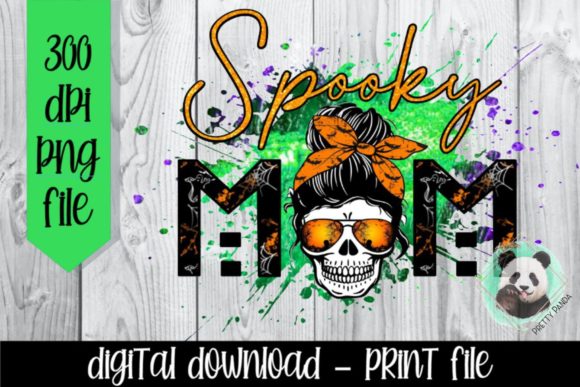
This review comes from the perspective of someone who has to answer to clients when a hoop burns a hole in a sweatshirt or when fine details merge into a blob after washing. The product description notes that this is a high-resolution PNG file, measuring 3000 x 2550 pixels at 300 dpi with a transparent background. While this specification is ideal for sublimation printing, using it for embroidery requires a specific workflow and a clear understanding of how raster graphics translate into needlework.
First Impressions and Visual Personality
The mood of this design is playful yet polished. It captures that specific "spooky cute" aesthetic that dominates the October market, appealing to moms who want to participate in the holiday without going full horror. The layout appears balanced, with a central focus that would sit comfortably on the chest of a tee or the front of a tote bag. However, because this is provided as a Graphics file within the Crafts category, rather than a native embroidery file, the responsibility falls on you, the maker, to interpret the lines.
The visual personality suggests a design that relies heavily on clean shapes. In embroidery, clean shapes are your best friend. They allow for smooth satin stitches or uniform fill stitches without excessive jumping or trimming. If you are digitizing this yourself, look for opportunities to simplify complex gradients into solid thread colors. The transparency of the background is a crucial feature here, allowing you to place the design over any fabric color without worrying about white boxes or awkward cropping.
Real-World Application: The Custom Tote Scenario
Let’s walk through a real-life scenario. Imagine a client orders a set of personalized gifts for a group of friends attending a pumpkin patch. They want matching canvas tote bags. This is where the Spooky Mom Halloween Sublimation Design shines if handled correctly. Canvas has a distinct weave, meaning tiny details can get lost. Because the source image is high resolution, you can zoom in to trace the outlines accurately for digitization.
For a tote bag, I would recommend treating this almost like an applique design if the graphic has large solid areas. Using a fabric fill for the larger shapes reduces stitch count and prevents the bag from becoming stiff and board-like. If you choose to stitch it out fully, pay close attention to stitch density. A dense fill on canvas can cause puckering if you do not use a heavy-cut stabilizer. The goal is a handmade product that feels premium, not one that looks like it struggled against the fabric texture.
Apparel and Curved Surfaces
Moving from totes to custom apparel, such as sweatshirt embroidery or baby clothes, the considerations shift. Sweatshirts are forgiving due to their thickness, but they are also bulky. Placing a large graphic on the chest of a hoodie requires checking your hoop size constraints. If the design exceeds your standard 5x7 or 6x10 hoop, you will need to split the design, which can be tricky with intricate graphics. Always test the design on scrap fabric first. This is non-negotiable.
For baby embroidery, softness is paramount. A design that looks great on screen might feel scratchy on a onesie if the stitch density is too high. Here, the simplicity of the Spooky Mom theme works in your favor. You can reduce the number of underlay stitches and use softer rayon threads to ensure the finished product is gentle against sensitive skin. When working with stretchy fabrics, a tear-away stabilizer is often insufficient; consider a cut-away to maintain the integrity of the design after multiple washes.
Technical Considerations for Digitizers
Since this is a PNG and not a pre-digitized embroidery file, you must be prepared to do the heavy lifting. Here are my practical notes for converting this graphic into a stitch-ready format:
- Check Thread Color Contrast: The digital image may use subtle shading. In embroidery, shading is achieved through thread changes or angle shifts. Decide early if you want a multi-color look or a simplified two-tone version.
- Review Stitch Density: High-resolution images can trick you into thinking you need thousands of stitches. Often, less is more. Reduce density to prevent fabric distortion.
- Inspect Small Details: Zoom in to 10in x 8in actual size. Are there tiny gaps or thin lines? These may need to be widened or removed entirely to prevent thread breaks.
- Test Black and White Mockups: Before stitching, view your digitized version in grayscale. If the design loses its shape without color, you need to adjust your underlay or outline stitches.
Where to Use Caution
Not every surface is suitable for this type of graphic conversion. Be careful with dark fabrics if the design relies on light colors. You will need a strong underlay or possibly a white base layer to make the colors pop, which adds bulk. On curved surfaces like caps, the distortion can warp the proportions of the "Mom" text or graphical elements. Always run a test stitch on a similar cap material before committing to the final product.
Additionally, avoid placing this design on areas subject to high friction, such as the cuffs of sleeves or the bottom hem of pants, unless you reinforce it significantly. Decorative accents should remain decorative; if they become functional burdens, the customer experience suffers.
Commercial Value and Brand Consistency
For Etsy sellers and boutique owners, the perceived value of a product is tied to its professionalism. A crisp, well-stitched design builds trust. When a customer receives a personalized gift that looks exactly like the printable mockup on your listing, you secure repeat business. The Spooky Mom Halloween Sublimation Design offers a trendy aesthetic that can elevate your holiday embroidery projects. However, remember that licensing terms vary. Since this is sold as a graphic for sublimation, you must confirm whether the creator allows you to sell finished embroidered items. Never assume commercial rights for embroidery just because they are granted for sublimation.
In conclusion, this design is a strong candidate for your autumn catalog if you approach it with a digitizer’s eye. It is not a plug-and-play solution for embroidery machines, but rather a high-quality asset that rewards careful preparation. By respecting the fabric, choosing the right stabilizer, and refining the stitch path, you can turn this digital graphic into a standout piece of commercial embroidery art. Whether it ends up on a kitchen towel, a pillow cover, or a limited-edition sweatshirt, the key is in the details you add during the digitization process.