Review: Stitching the "Sorry I’m Only Talking to My Cat" SVG
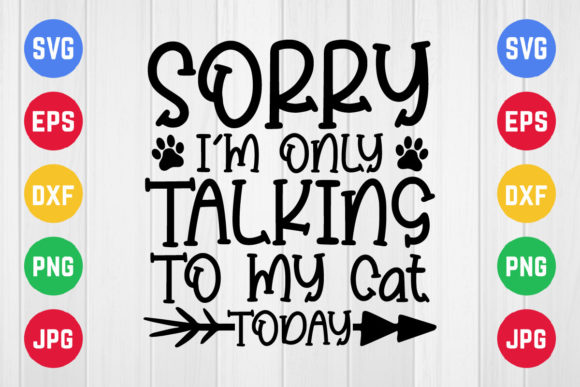
As a designer who has spent countless hours digitizing and testing machine embroidery design files, I approach every new asset with a mix of curiosity and skepticism. The market is flooded with generic phrases, but occasionally, a design catches my eye because it balances personality with technical viability. Recently, I evaluated the Sorry I’m Only Talking to My Cat Svg, a piece of digital artwork marketed as a hand-drawn lettering phrase for pet moms. While the product description highlights its use for Cricut and Silhouette cutting, my focus was strictly on how this graphic translates into thread for real-world embroidery projects.
First Impressions: Mood and Visual Personality
The immediate appeal of this design lies in its casual, relatable humor. The phrase taps into the growing niche of proud pet owners who prioritize their furry companions over social small talk. Visually, the hand-drawn calligraphy style suggests warmth and approachability. It does not feel rigid or corporate; instead, it carries the organic imperfections that make handmade products feel authentic. For an embroidery designer, this aesthetic is promising because it allows for creative interpretation. The isolated layout on a white background, as described in the source files, makes it easy to visualize against various fabric colors without fighting complex background elements.
However, a pretty preview image is not enough. The critical question is whether the fluidity of calligraphy can survive the mechanical constraints of an embroidery machine. Hand-lettered fonts often feature thin connectors and varying stroke widths that can disappear under stitch density or break during washing if not properly reinforced.
Real-World Application: From Digital File to Finished Product
To test the versatility of this design, I imagined several common scenarios for small business owners and hobbyists. The most natural fit is undoubtedly a sweatshirt embroidery project. A crewneck sweatshirt provides a stable, thick canvas that can support the weight of the stitching without puckering. Placing this phrase across the chest or slightly off-center on the left side creates a boutique look that appeals to the Etsy demographic.
Another strong candidate is a canvas tote bag design. Tote bags are durable, and the flat surface allows for larger hoop sizes, ensuring the entire phrase remains legible. The contrast between the rugged texture of canvas and the delicate nature of calligraphy creates an interesting visual tension. For those running a craft business, offering this as a personalized gift option—perhaps adding the cat’s name below the main phrase—could significantly increase perceived value.
I also considered its use on smaller items like baby embroidery onesies or kitchen towels. Here, caution is required. The length of the phrase might overwhelm a small garment, and the intricate loops of the lettering could become lost on textured terry cloth. For these applications, scaling down the design while maintaining stitch integrity is crucial.
Technical Considerations for Embroiderers
Since the source file is provided as an SVG and EPS 10, it is primarily a vector graphic intended for cutting machines. This means it is not a ready-to-stitch embroidery file with pre-defined stitch types. As a reviewer, I must emphasize that you will need to digitize this design yourself or hire a digitizer. This step is vital for controlling the outcome.
When converting this calligraphy into stitches, pay close attention to stitch density. Calligraphic strokes vary in width. The thicker parts of the letters may require a fill stitch to appear solid, while the thinner connectors might only support a satin stitch or even a single running stitch. If the density is too high on thin strokes, the thread will bunch up and break. If it is too low on thick areas, the fabric will show through, ruining the crispness of the black lettering.
Stabilizer choice is equally important. For stretchy fabrics like t-shirts, a cut-away stabilizer is non-negotiable to prevent distortion. For woven fabrics like aprons or pillow covers, a tear-away stabilizer may suffice, but testing is essential. Always test the design on scrap fabric first. Check how the thread interacts with the fabric texture. Dark fabrics will require careful color selection; while black thread on black fabric is subtle, it may lack definition. Consider using a contrasting thread color or adding a slight backing outline to make the text pop.
Navigating Challenges: Small Hoops and Curved Surfaces
One area where this design requires careful planning is placement on curved surfaces, such as caps or hats. The horizontal nature of the phrase means it must follow the curve of the cap front perfectly. If the design is too wide, it will wrap around the sides and distort. In such cases, consider breaking the phrase into two lines or reducing the font size. Additionally, tiny details in the lettering, such as the dots on the 'i' or the tails of the 'g' and 'y', must be checked for minimum stitch length. If these details are too small, they may not stitch out cleanly and could unravel after the first wash.
For commercial embroidery projects, consistency is key. Ensure that your digitized version maintains the same proportions across different hoop sizes. A design that looks balanced in a 5x7 hoop might look cramped in a 4x4 hoop. Always review the design in black and white mockups to check for contrast and clarity before committing to thread.
Value and Brand Consistency
Using a well-executed version of Sorry I’m Only Talking to My Cat Svg can enhance brand consistency for shops targeting pet lovers. It signals that the seller understands their audience’s humor and lifestyle. High-quality stitching builds customer trust. Sloppy digitizing, on the other hand, can damage a brand’s reputation. Buyers of custom apparel expect durability and professionalism. A clean, well-digitized design contributes to the overall perception of quality, encouraging repeat business and positive reviews.
Furthermore, this design serves as an excellent design asset for creating printable mockups. Even before stitching, you can use the SVG to create realistic product previews for your online store. This helps gauge customer interest and refine your marketing strategy without wasting thread or fabric.
Final Verdict and Practical Advice
The Sorry I’m Only Talking to My Cat Svg is a charming graphic with strong potential for embroidery, provided it is handled with technical care. It is not a plug-and-play solution for embroidery machines but rather a high-quality starting point for digitizers. Its success depends entirely on how well it is converted into stitches.
- Check Licensing: Before selling finished items, confirm the license terms associated with the digital artwork. Ensure it allows for commercial use of physical products.
- Digitize Carefully: Pay attention to stroke width variations. Use satin stitches for thin lines and fill stitches for broader areas.
- Test Extensively: Stitch out samples on various fabrics, including knits, wovens, and textured materials.
- Optimize for Hoop Size: Adjust the scale to fit standard hoops without losing detail.
- Consider Contrast: Choose thread colors that stand out against the fabric background.
For Etsy sellers and small shop product creators, this design offers a trendy, relatable option that fits well within the current market demand for pet-centric decor and apparel. With proper digitizing and attention to detail, it can become a standout item in your finished product lineup. Remember, the goal is not just to stitch the words, but to capture the playful spirit of the message in thread.